

Planning to move abroad?
We will arrange a comfortable and safe move for you to a new place with transportation of all your personal belongings

Heavy Item Handling for Moving
Heavy item handling is a moving service category used for items that are unusually heavy, awkward, difficult to grip, or difficult to route safely through the property. In practice, the challenge is not only the item’s weight; it is also its shape, balance, carry position, route difficulty, and how often it must be lifted or repositioned. NIOSH’s lifting guidance and OSHA’s materials-handling publications both emphasize that lifting risk depends on task design and body position, not just the number on the scale.
What counts as a heavy item
In home moving, heavy items often include:
- safes
- gym equipment
- large appliances
- stone or marble furniture
- oversized sofas
- solid wood cabinets
- vending machines
- commercial equipment
- some pianos
- packed cartons with dense contents such as books, tools, or records
Why heavy handling changes the job
A move with several heavy items may require:
- more crew members
- lifting aids or dollies
- route protection
- slower working speed
- more time for dismantling or reassembly
- separate scheduling
- extra risk controls for stairs, narrow turns, or long carry distances
OSHA notes that proper work practices, equipment, and controls are essential to reduce accidents in moving and storing materials. NIOSH likewise uses variables such as horizontal reach, vertical position, frequency, and travel distance when evaluating lifting risk. That is exactly why two items with similar weight can have very different handling difficulty and cost.

Weight is only one part of the problem
Customers often assume heavy means “anything very heavy.” Operationally, that is incomplete. An item can be difficult because it is:
- bulky
- top-heavy
- fragile
- slippery
- hard to grip
- impossible to keep close to the body
- dangerous to rotate on stairs
- hard to load without tilt or impact
OSHA specifically warns that reaching, bending, and carrying awkward loads in one-sided or off-center positions increases strain and injury risk. That is why a relatively smaller awkward object can sometimes be harder to move safely than a larger item with good handholds and a straight route.
Common situations that increase difficulty
Heavy item handling becomes more complex when there is:
- no elevator
- narrow staircase
- sharp turn on landing
- uneven outdoor access
- long hand carry distance
- restricted parking
- insufficient loading space
- the need for an external lift
- the need to dismantle doors or furniture
- sensitive flooring or wall finishes
These factors matter because the safer the route, the more controlled the lift. The worse the route, the more labor and planning are needed.
Why you should declare heavy items in advance
If heavy or awkward items are not declared, a moving team may arrive with the wrong crew size, wrong equipment, or the wrong vehicle setup. That can cause delays, rescheduling, or unsafe on-site improvisation. From a risk perspective, the problem is predictable: both OSHA and NIOSH treat manual handling as something that should be assessed and controlled before the task, not discovered halfway through it.
What affects the cost of heavy item handling
The main pricing factors are:
- actual or estimated weight
- dimensions
- grip and balance
- whether it can be dismantled
- whether stairs are involved
- whether a service lift is usable
- carry distance
- route complexity
- need for special equipment
- risk of surface damage or access damage
- need for extra packing or crating
What to include in your survey
To quote heavy items accurately, ask for:
- item type
- approximate weight if known
- dimensions
- whether it can be dismantled
- origin and destination floors
- elevator details
- stair details
- hand carry distance
- photos if possible

Why choose us?
Working with us will ensure:
- Timely delivery of your belongings, so you can be sure that they’ll arrive when you need them.
- Expert handling of customs procedures, ensuring that your move is free from unexpected problems or delays.
- No wasted time, as we work efficiently to make sure that your move is completed as quickly as possible.
- No unnecessary financial losses, thanks to our competitive pricing and careful management of your move.
Why choose us?
Local and international reliability
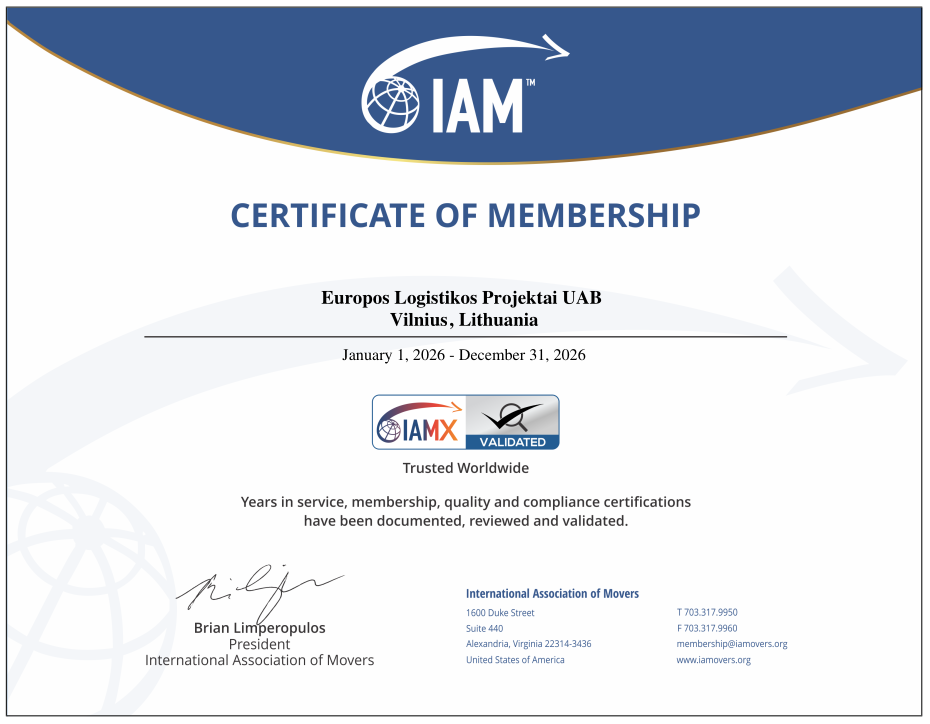
Our membership in international moving organizations guarantees the highest standards of service and reliability. We work with a global network of partners to ensure the smooth and safe transportation of your belongings in any direction.



Our prices depend only on the volume of your belongings.
Forget about hourly rates, mileage calculations and unexpected bills! We have already calculated prices for different quantities of belongings and provide them to you in advance. You will not have to worry about how many movers, cars or how long the move will take – just choose the right service package according to the volume of your belongings and get a clear and fair price.