

Planning to move abroad?
We will arrange a comfortable and safe move for you to a new place with transportation of all your personal belongings

External Lift for Moving
An external lift is a mechanical lifting system used outside a building to move furniture and household goods through a window, balcony, or other exterior opening when the internal route is not practical. It is commonly used when staircases are too narrow, lifts are too small, or bulky items cannot be moved safely through the building.
For many people, the idea of using an external lift sounds unusual until they come across a difficult access situation. In practice, it is a very practical moving solution. It helps move large, heavy, or awkward items in a more controlled way and can reduce the difficulty of carrying them through narrow stairwells or tight internal spaces.
In international and long-distance moves, access conditions matter just as much as the distance itself. A shipment may travel smoothly across countries, but the final stage can still be challenging if furniture cannot fit through the building in the normal way. This is where an external lift can become an important part of the move.
What an external lift means
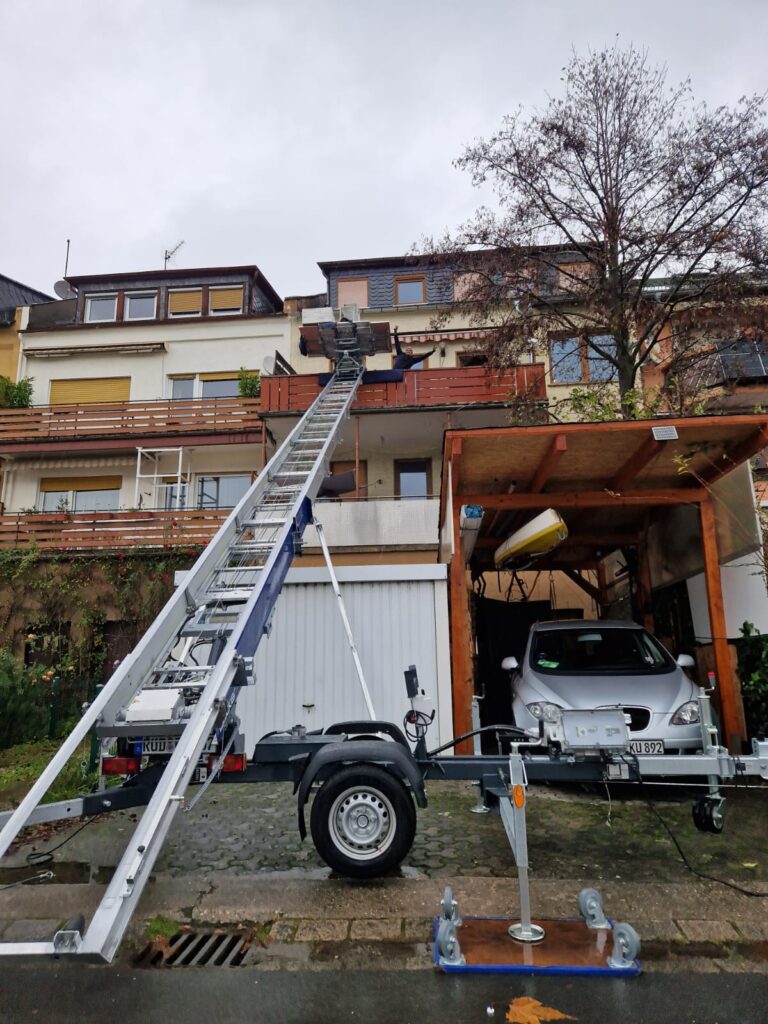
An external lift is equipment positioned outside the building to raise or lower belongings directly between the property and the moving vehicle.
Instead of carrying a large item up several flights of stairs or forcing it through a tight corridor, the item is placed on a lifting platform and moved through an exterior opening in a controlled way. This can make the move safer, more efficient, and less stressful for both the moving team and the customer.
An external lift is not used for every move. It is normally chosen only when the internal route is too difficult, too narrow, too risky, or simply unsuitable for the type of items being moved.
When an external lift is usually needed
An external lift is usually needed when furniture or household goods cannot be moved safely through the inside of the building.
This may happen when:
- staircases are too narrow
- landings are too tight for turning large items
- the building lift is too small or unavailable
- there are several upper floors with difficult access
- the item is too bulky or awkward for the internal route
- moving through the building could damage walls, doors, flooring, or the item itself
In some cases, the issue is obvious from the beginning. A large sofa, wardrobe, piano, or long tabletop may simply not fit. In other cases, the difficulty only becomes clear when the internal route is assessed properly.
Which items often require an external lift
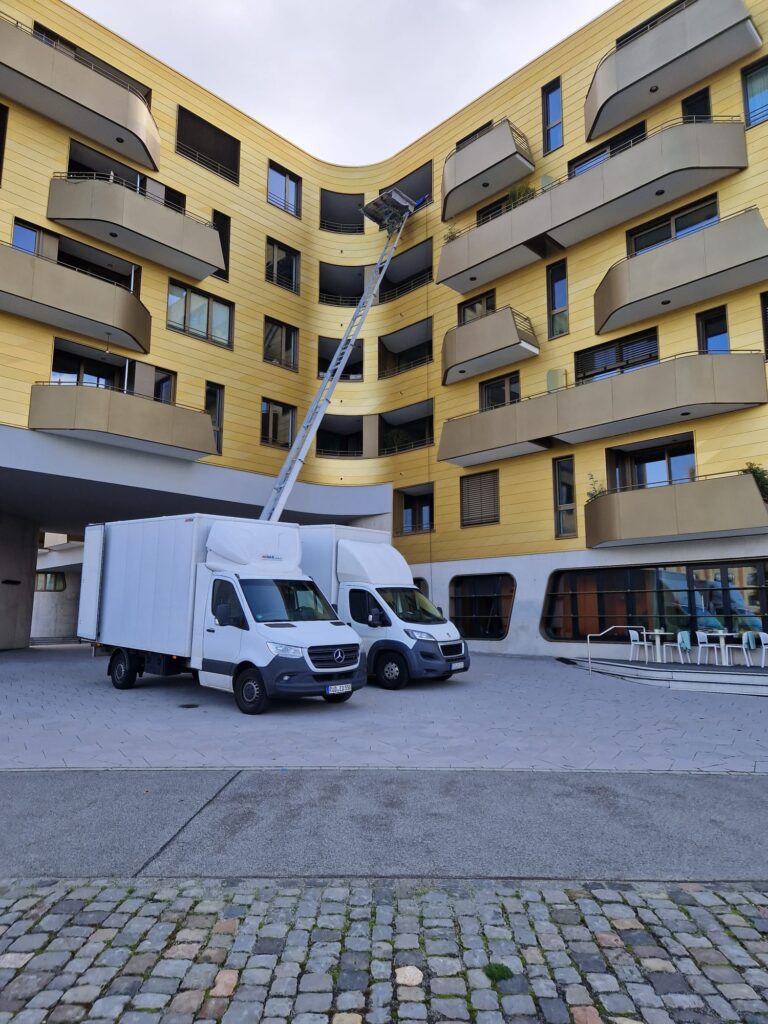
An external lift is often considered for large or awkward household items that are difficult to move indoors.
Typical examples include:
- large sofas
- wardrobes
- oversized mattresses
- long dining tables
- heavy appliances
- bulky armchairs
- large shelving units
- marble or stone-top furniture
- pianos in some situations
- delicate furniture that should not be forced through narrow spaces
The issue is not always weight alone. A relatively light item may still require an external lift if it is long, inflexible, fragile, or too awkward to manoeuvre safely inside the building.
Why an external lift can be the better option
At first glance, using an external lift may seem like an extra complication. In reality, it is often the more sensible and safer option.
Trying to force large items through narrow stairs or tight corners increases the risk of damage and delays. It can also create a more stressful and physically difficult move. An external lift can provide a straighter, more controlled route between the property and the truck.
In many cases, it is the most efficient way to move large furniture without unnecessary dismantling, difficult carrying, or strain on the building and the items themselves.
How an external lift works
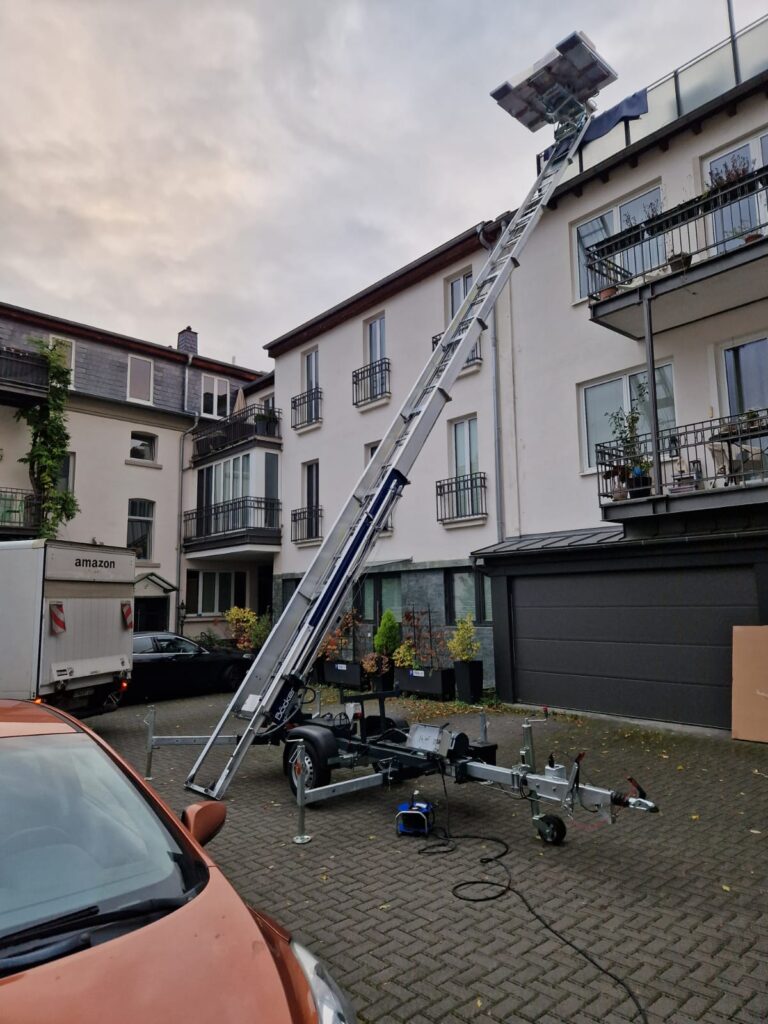
When an external lift is used, the equipment is positioned outside the building at a suitable access point. Items are carefully placed onto the lift platform and raised or lowered to the relevant level, where they can be moved in or out through a window, balcony, or appropriate opening.
The exact method depends on the building, the type of equipment available, the floor level, the size of the opening, and the items being moved.
This process requires planning, careful positioning, and enough outside access to set up the lift safely. It is not only about the building itself. The surrounding street or exterior space must also be suitable for the equipment and the vehicle setup.
Why an external lift affects the move
Using an external lift changes the way the move is carried out because it introduces additional equipment, planning, and access requirements.
The team needs to assess whether the building and surrounding area are suitable, whether the items can be moved through the relevant opening, and whether the lift can be positioned safely. Timing and coordination also become more important.
At the same time, an external lift can make a difficult move much more manageable. It may reduce the amount of carrying indoors, speed up the handling of large items, and lower the risk of damage to furniture and property.
Why an external lift can affect cost
An external lift can affect cost because it changes the equipment and logistics involved in the move.
It may require:
- specialist lifting equipment
- additional planning
- setup time
- careful access assessment
- possible street-use or parking arrangements
- a more coordinated loading process
However, it can also save time and reduce complications on moves where the internal route would otherwise be very difficult. In that sense, an external lift may increase one part of the cost while reducing delays, labour difficulty, and damage risk elsewhere in the move.
External lift and internal lift are not the same thing
An internal building lift and an external lift are very different.
A building lift is part of the property and may or may not be suitable for moving. Many are too small for large furniture, have weight limits, or are simply not practical for a full household move.
An external lift is separate equipment brought in specifically to move goods between the property and the vehicle through an exterior route.
This distinction matters because a building may technically have a lift but still need an external one if the internal lift is too small or unsuitable.
How to tell if an external lift might be needed
There are several signs that an external lift may be worth considering.
It may be necessary if:
- large furniture has been difficult to move in or out before
- the stairwell is narrow or has sharp turns
- the building lift is too small for major items
- the property is on an upper floor
- a window or balcony offers a more practical route
- there is concern about damaging walls or furniture during internal carrying
- certain items are obviously too large for the internal route
Even when the answer is not certain, these are good reasons to check access carefully in advance.
Why planning matters
Moves involving an external lift are much smoother when they are planned properly from the start.
If the need for one is identified early, the right equipment and timing can be arranged in advance. This helps avoid last-minute surprises, failed delivery attempts, or delays caused by discovering too late that a large item cannot be moved through the building.
Good planning also makes it easier to assess the outside setup, building access, and whether the chosen route is practical for the items involved.
When an external lift is most commonly used
External lifts are especially common in urban apartment moves, upper-floor properties, buildings with narrow staircases, and relocations involving large or bulky furniture.
They are also often used in European city buildings where access can be tighter and internal routes less practical for modern furniture sizes.
In international moves, this can be particularly relevant at destination. The long-distance transport may be straightforward, but the final delivery can still require a specialized access solution.

Why choose us?
Working with us will ensure:
- Timely delivery of your belongings, so you can be sure that they’ll arrive when you need them.
- Expert handling of customs procedures, ensuring that your move is free from unexpected problems or delays.
- No wasted time, as we work efficiently to make sure that your move is completed as quickly as possible.
- No unnecessary financial losses, thanks to our competitive pricing and careful management of your move.
Why choose us?
Local and international reliability
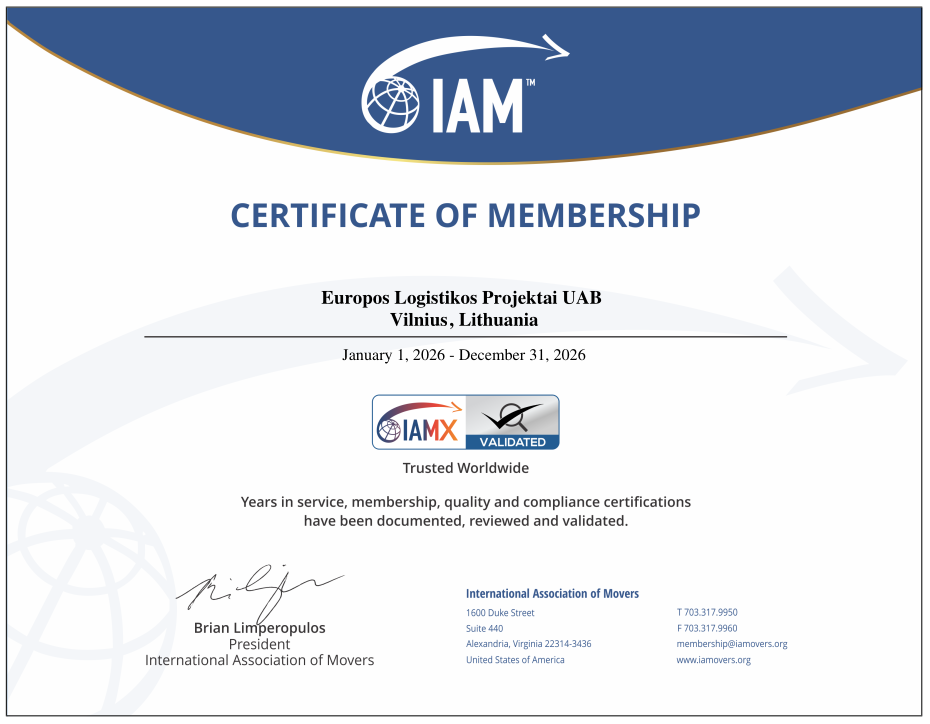
Our membership in international moving organizations guarantees the highest standards of service and reliability. We work with a global network of partners to ensure the smooth and safe transportation of your belongings in any direction.



Our prices depend only on the volume of your belongings.
Forget about hourly rates, mileage calculations and unexpected bills! We have already calculated prices for different quantities of belongings and provide them to you in advance. You will not have to worry about how many movers, cars or how long the move will take – just choose the right service package according to the volume of your belongings and get a clear and fair price.